
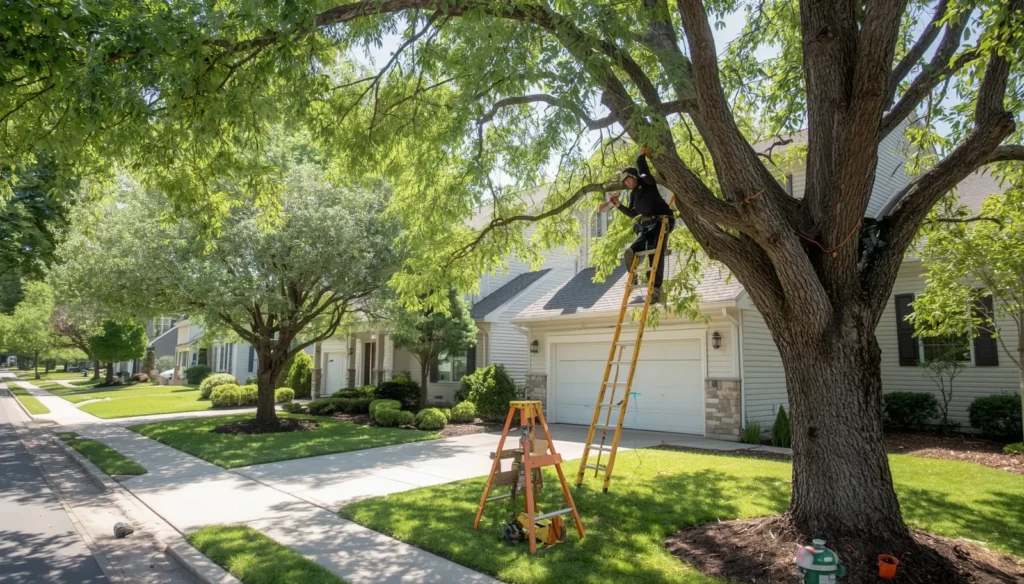
When Should You Schedule Tree Pruning in Deansboro, NY?
The rural beauty of Deansboro, New York, is defined by its sweeping valleys, running brooks, and dense, majestic woodlands. Nowhere is this lush scenery more visible than along College Hill Road, a critical corridor connecting our local community upward toward the neighboring historic educational grounds. The deep residential properties and rolling farmsteads lining this region are home to thousands of mature hardwoods and softwoods, including old-growth sugar maples, massive oaks, and dense evergreens.
While these expansive canopies create beautiful seasonal landscapes, they also demand consistent structural maintenance. Managing a larger property means understanding that proper care is a year-round commitment. For homeowners living along these winding mountain roads, deciding when to invest in a professional tree pruning service Deansboro NY depends entirely on tree biology and local weather shifts. Timing your tree care correctly ensures your landscape remains vibrant, clear of utility hazards, and fully prepared to withstand the volatile climate patterns of Central New York.
1. Why Dormant Winter Pruning Rules the Upper Canopies
When it comes to major structural alterations, structural thinning, and balancing heavy tree crowns, late winter stands out as the ultimate season for action. Between the months of January and March, local trees enter a deep state of winter dormancy. During this quiet biological period, metabolic activity drops to a near-halt, and the sap stops flowing aggressively through the vascular system.
For homeowners residing near the slopes of College Hill Road, scheduling structural maintenance during the dead of winter offers massive ecological and structural advantages:
Flawless Visual Frameworks: Once autumn winds strip away the leaves, the entire architectural skeleton of the tree is completely bare. This clear view allows skilled climbing crews to quickly identify hidden structural defects, including interlocking branches, hairline fractures, and deep V-shaped bark inclusions that are completely hidden during the summer months.
Rapid Spring Healing: Making precision cuts right before spring arrives ensures that wounds are only exposed for a very short period. As soon as the ground thaws and the growing season begins, the tree rapidly directs its fresh spring energy into sealing off the fresh cuts, keeping wood decay from settling into the trunk.
Zero Risk of Disease Transmission: Destructive fungal pathogens and wood-boring insects are completely inactive during freezing winter conditions. Pruning during this window eliminates the risk of open cuts attracting destructive pests, keeping your trees completely safe from secondary infections.
2. Spring Pruning: Gentle Maintenance and Flowering Variations
As the winter snow melts into the Deansboro Brook, the local landscape wakes up with an explosion of new vegetative growth. While early spring is a busy season for general yard cleanup, major structural branch removal should generally be scaled back during this high-growth phase. When trees are actively expanding their new leaves and pushing buds, their bark is exceptionally tender, making it highly vulnerable to tearing and structural stress.
However, spring is the perfect operational window for managing specific ornamental variations and early-flowering trees. Species like wild cherries, flowering dogwoods, and local crabapples set their flower buds during the previous summer season. If you prune these varieties during the winter, you will accidentally slice away the upcoming spring blossoms.
The ideal strategy for these ornamental varieties is to schedule your trimming immediately after their spring floral display fades. This precise timing allows you to shape the young canopy, thin out dense shoots, and remove dead wood without sacrificing the vibrant seasonal colors that beautify local lawns.
3. Summer Canopy Trimming for Growth Control and Hazard Management
Summer is typically viewed as a time for relaxation, but for property owners near College Hill Road and State Route 12B, it can also bring severe summer thunderstorms. High-wind cells rolling through Oneida County put immense mechanical strain on overgrown trees. Consequently, summer maintenance focuses primarily on risk reduction, balancing heavy limbs, and clearing sightlines.
Pruning during July and August allows arborists to easily spot limbs that are struggling under the weight of heavy summer leaves. Branches that sag dangerously low over active driveways, public sidewalks, or adjacent roofing structures can be thinned out before they break during a sudden summer storm.
Furthermore, summer is the most effective time to slow down the growth of overly aggressive trees. If a large maple or elm is starting to crowd out your home’s structural boundaries, cutting back the canopy in mid-summer limits the tree’s leaf surface area, reducing its overall food production and slowing down its growth for the rest of the year.
4. The Fall Danger Zone: Why Autumn Pruning Should Be Avoided
If there is one time of year when local property owners should avoid major tree trimming, it is the autumn season. While cleaning up fallen leaves might make you want to tidy up the upper branches as well, making major cuts during September, October, and November can cause serious long-term damage to your trees’ health.
During the fall, the surrounding environment is filled with airborne fungal spores that specialize in breaking down dying wood. Open pruning cuts made during this damp transition period provide an easy entryway for these wood-rotting organisms, allowing decay to take hold before the tree can mount a biological defense.
Additionally, autumn is when trees naturally redirect their vital sugars and nutrients down from the leaves into the root system for winter storage. Trimming live branches during this shift disrupts this natural resource cycle, forcing the tree to waste precious energy attempting to heal cuts instead of preparing for the harsh winter ahead. Keep your pruning tools stored away in the fall and wait for the safe, deep dormancy of winter.
5. Navigating Hazardous Structural Interventions Near Local Utility Lines
Beyond seasonal timing, managing large properties along College Hill Road requires careful attention to municipal right-of-ways and overhead electrical supply lines. Given our region’s heavy winter ice storms and strong summer winds, overgrown branches tangled in utility lines present an immediate fire hazard and increase the risk of sudden power outages.
When heavy ice accumulates on branches hanging over power wires, the risk of sudden line breaks skyrockets. Entrusting these high-risk areas to an experienced tree pruning service Deansboro NY or a dedicated local arborist ensures that all clearing work is handled safely and legally. Fully insured professionals utilize advanced insulated tools and specialized rigging methods to remove hazardous limbs around live wires, protecting the local power grid and keeping your neighborhood secure.
6. Proactive Tree Care as a Shield Against Severe Regional Weather
The climate of Central New York puts immense physical stress on residential landscapes throughout the shifting seasons. The unique topography around Deansboro often funnels strong winds through the valleys, creating microclimates that trap heavy snow and ice on extended branches.
Investing in consistent, professional maintenance prevents these weather events from turning into costly property emergencies. Removing dead, diseased, or poorly attached branches reduces the “sail effect” during high winds, allowing heavy storms to pass safely through the canopy without breaking main structural limbs. This preventative care protects your roof, keeps your driveways clear, and saves you from the high costs of emergency storm clearing.
7. The Ultimate Value of Partnering with Professional Arborists
It can be tempting to try and handle tree trimming yourself with a basic ladder and a chainsaw, but working on large trees is highly technical and dangerous. Climbing high into mature canopies requires specialized rigging equipment, extensive safety training, and comprehensive liability insurance to protect against unexpected property damage.
At J Wrattens Tree Services, Tree Service Deansboro NY, we specialize in providing scientific, seasonally appropriate canopy maintenance for homeowners throughout Deansboro and the surrounding communities. Our fully licensed and insured teams bring years of local experience to every project, ensuring your trees receive the exact care they need at the absolute best time of year. Whether you need precise tree pruning service Deansboro NY methods applied to your historic property or detailed care for an orchard near College Hill Road, we are dedicated to keeping your home safe, beautiful, and thriving through every changing season.
Frequently Asked Questions
When is the absolute best time of year for tree pruning near College Hill Road in Deansboro, NY?
The ideal time for major structural pruning is during late winter, specifically between January and March, while the trees are fully dormant. Trimming during this period offers excellent visibility of the branch structure, reduces sap loss, and eliminates the risk of pest infestations and fungal infections.
Can I safely prune my trees during the summer months?
Yes, summer trimming is highly effective for removing dead wood, clearing low branches away from driveways, and thinning out dense canopies to improve airflow before summer thunderstorms arrive. However, major structural alterations should still be saved for winter dormancy.
Why should I avoid pruning my trees during the autumn season?
Pruning in the fall is discouraged because the damp seasonal air is full of active fungal spores that can quickly infect fresh cuts. Additionally, trees are busy moving vital nutrients to their roots for winter survival, and forcing them to heal new wounds during this transition can sap their energy and leave them vulnerable to winter damage.
How does routine tree trimming protect my home from storm damage?
Regular pruning removes heavy, weakened, and dead branches that are most likely to snap under the weight of heavy lake-effect snow, thick ice, or high winds. By opening up the canopy to let wind and snow pass through easily, you significantly lower the risk of limbs falling onto your roof, vehicles, or power lines.
What are the main benefits of hiring a professional tree pruning service Deansboro NY?
Professional teams bring specialized knowledge, heavy-duty rigging gear, and comprehensive liability insurance to every job. They make clean, precise cuts that promote rapid healing, minimize structural stress, and identify subtle signs of internal decay that the average homeowner might miss from the ground.